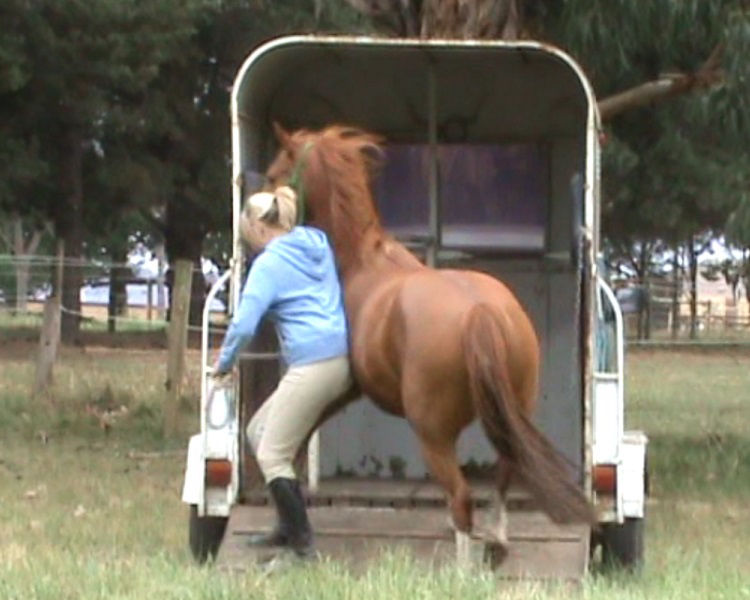
Based on the number of enquires we receive, it appears that float loading or trailer loading, is the most prevalent problem.
The good news, is that your horse can be trained to walk on the float calmly, responsively and safely, without causing you anxiety.
View the 3 part intro video's below (and there is more below the video's)
Note: Click the 'play' arrow once. The centre should spiral to start. Whilst playing, it may stop and start several times whilst your computer catches up. It will depend on your internet connection speed. If it doesn't start, click once more. If you accidentally end up at youtube, click the 'back' or if it has opened a new web browser page, click X in the top right hand corner to close page. Trailer / Float Loading a Horse Part 1 = 4:41 mins Norm briefly discusses aspects of horse float loading safety, equipment and float design.
|
|
Part 2 = 5:39 mins Norm shows how one person can load two horses easily from outside of the float. Even without a centre divider or breech gates/chains, providing the horse is trained sufficiently. Watch the horses walk on and stand calmly while the tailgate is closed. |
|
Part 3 = 2:22 mins Norm loads one young, inexperienced horse, while it is distracted by its paddock mates. |
The critical aspect of the above video's is safety and training. Both are required to achieve a calm and efficient result as demonstrated. If attempting the above system without coaching, make sure that you keep yourself safe.
If you read some of the client experiences, you will see that there have been some extreme cases of horses and owners having touble, which have been turned around to create a cooperative and polite attitude from the horse and confidence for the handler.
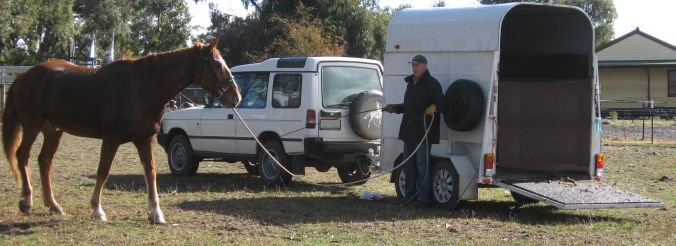
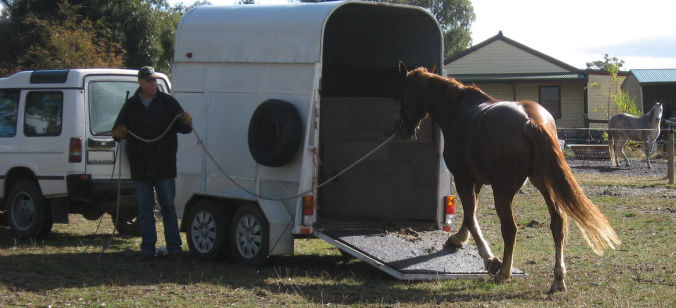
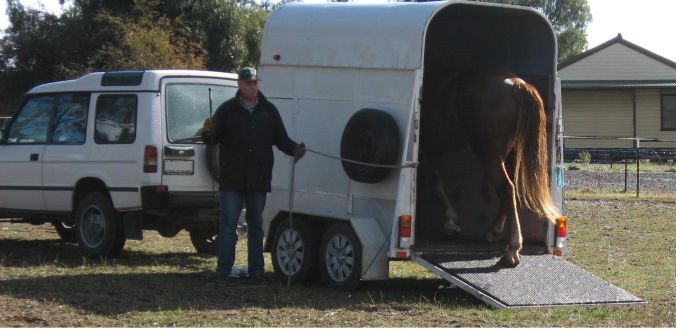
Below are some pictures of how easy float loading can be, once comprehensively trained for good and safe floating. Note that the ramp floor is supposedly non-slip. However, it is not a true non-slip horse float ramp. Once this ramp gets wet or poopy, horses will slip. Once you have looked at this page, be sure to look at the matting information detailed at the bottom of the page.


Bliss!
Below is a clients horse who was extremely difficult to load.
This powerful Clydesdale Cross was an expert at using its strength against the handler.
However, after some discussion with Norm, the horse learned to get on board politely.
Look at the following series of pics -
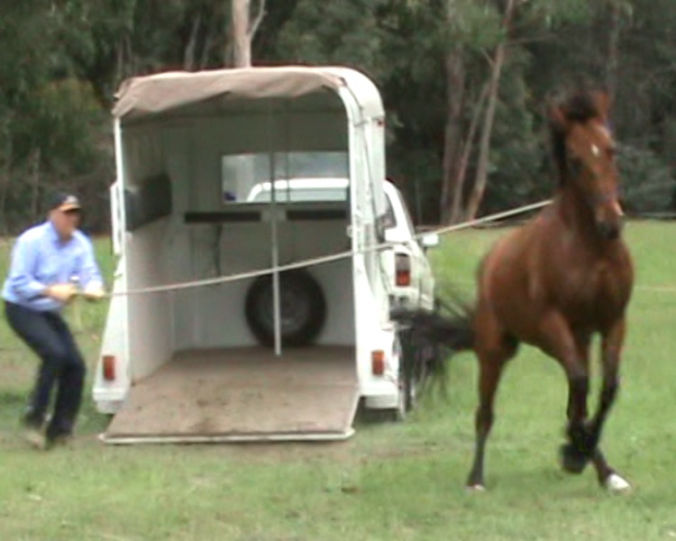
At the start, the horse will not go near the float. The horse had a habit of turning around to run off. Keeping control of the head is vital to the handlers' safety and changing the horses' attitude.
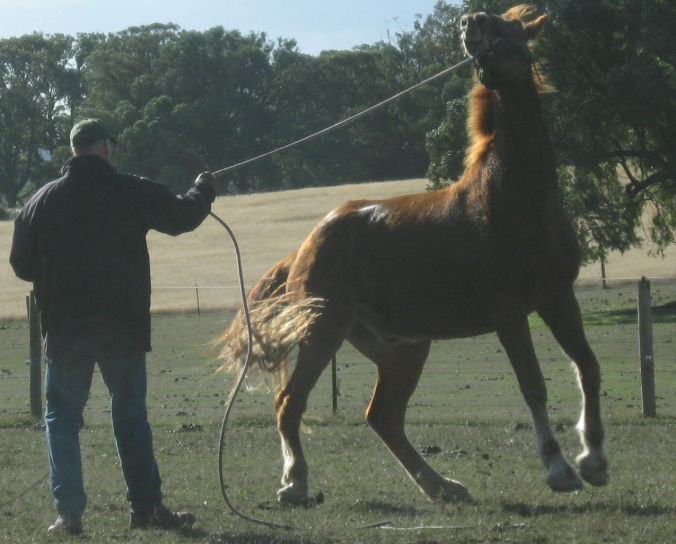
Below, note the tension spring of the ramp is set too strong, which keeps the ramp hovering above the ground. This does not help but the horse learns to cope easily. The whip effect in the rope is caused by the horse refusing to go forward and tossing his head. He is so powerful that any movement has significant 'feel' to it.
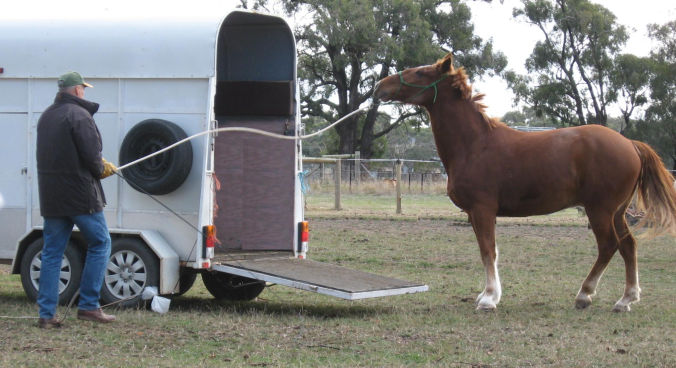
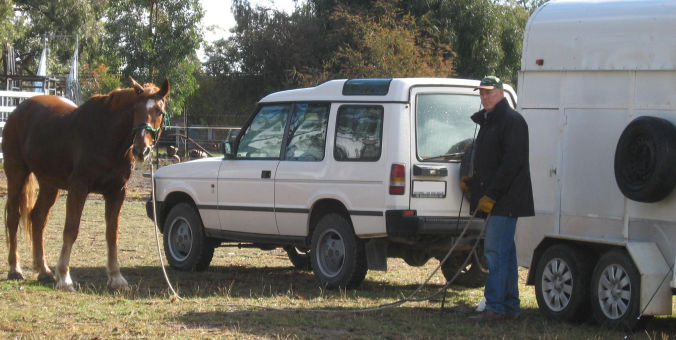
After an hour or so, we progress to quietly walking onto the float. We start with the horse relaxed, standing away from the float. Then ask the horse to walk around and onto the float, without the handler moving towards the horse or ramp.
notice the distance that Norm is standing from the horse and ramp
the horse is now cooperating and Norm gently controls the horses' head as it nears the ramp
even the mare in the backgound above is impressed
Norm likes to have all horses at this level of softness.
Also, check out these horse float loading information pages: -
Safety design for horse floats
Trailer Loading